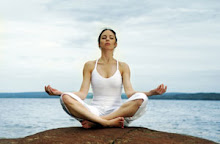
Would you like to be able to slow your thoughts or relax, improve your health, have more energy, be free of tension and take control of your life?
It is never too late to invest in yourself or to help yourself.
Absolute Relaxation facilitates you in learning new techniques to assist you in achieving your wellbeing.
Showing posts with label Stress Management. Show all posts
Showing posts with label Stress Management. Show all posts
Deep breathing is a simple, yet powerful, relaxation technique with its focus on full, cleansing breaths. It can be practiced almost anywhere, almost at a moment's notice and provides quick relief to stress levels helping to keep them in check.
Deep breathing is the cornerstone of many other relaxation practices, too, and can be combined with other relaxing elements such as dance, slow movement, aromatherapy and music.
How to practice deep breathing
The key to deep breathing is to breathe deeply from the abdomen. When you take deep breaths from the abdomen, rather than shallow breaths from your upper chest, you inhale more oxygen. The more oxygen you get, the less tense, short of breath, and anxious you feel. So the next time you feel stressed, take a minute to slow down and breathe deeply:
If you have a hard time breathing from your abdomen while sitting up, try lying on the floor. Put something on your stomach, breathing so that you feel your stomach rise as you inhale and exhale.
The body’s natural relaxation response is a powerful antidote to stress. Relaxation techniques such as deep breathing, visualization, progressive muscle relaxation, meditation, and yoga can help you activate this relaxation response. When practiced regularly, these activities lead to a reduction in your everyday stress levels and a boost in your feelings of joy and serenity. What’s more, they also serve a protective quality by teaching you how to stay calm and collected in the face of life’s curveballs.
Eating regular meals will ensure that the body received a steady supply of nutrients that can be utilised to provide energy as well as growth and repair.During the day the body’s energy systems take a leading role, enabling us to carry out our daily activities.At night the energy systems slow down, and maintenance and repairs actions come into force.Any food not processed during the day is sorted and fully digested while we are asleep, and the various nutrients are taken around the body and deposited where they are needed.Any waste matter is then let in our waste products’ department, ready for elimination in the morning.
Healthy eating means that we look for foods that will be advantageous to our own health and take in nutritious food – without it we may lack energy and be susceptible to a variety of illnesses and infections, by not adhering to a sensible diet, actually encourage health problems.Know your ingredients and what they are doing for and to your body.
The yogic diet is one consisting of pure, simple, natural foods which are easily digested and promote health.Simple meals aid the digestion and assimilation of foods.Nutritional requirements fall under five categories, protein, carbohydrates, minerals, fats and vitamins.Eating foods first hand from nature, grown in fertile soil (preferably organic, free from chemicals and pesticides) will ensure a better supply of these nutritional needs.Processing, refining and overcooking destroy much food value.
How to Correct Your Diet
The most important element is breathing having an influence on the body – mind – spirit.Through breathing as the main source of human nourishment, we introduce prana the energy that makes our bodywork.
What is vital within us is then animated by the prana.We can notice its effect on the heartbeat, on digestion, on movements, on thoughts, etc.When breathing is controlled and its rhythm is slow and deep, then our nourishment will change.We will be able to “feel” which is the kind of food that most suits us.Eating in a relaxed way means eating in tranquillity, chewing well, introducing less food, avoiding feeling heavy, having good indigestion.
Healthy eating guidelines that follow the principles of yoga:
·Eat at fixed times, refrain from eating between meals
·Try to eat as little processed food as possible
·Try not to eat meals late at night but if you are very hungry eat something light – perhaps fruit
·Take some lemon and honey in the morning for health and energy and to purify the blood
·Do not eat when you are angry as poisons are secreted by the glands and thrown into the bloodstream when you are angry or upset
Moving Toward a Yogic Diet
Some experts claim that the easiest path to success if a total and abrupt change, but for most people a more gradual approach is needed.Ifyou change a few habits at a time, you may experience less disruption of your life.If you are considering changing your diet, try these suggestions:
·Cut back on junk food and replace with nutritious substitutes; fresh fruit for sodas, whole grain cookies for those made with refined flour, roasted soy beans instead of peanuts, baked chips instead of fired, and so on.
·Add more fruit and vegetables.Focus on green leafy vegetables such as cos and iceberg lettuce (while in season) and Chinese cabbage.The cruciferous vegetables – cabbage, cauliflower, broccoli and Brussels sprouts – are cancer preventers.
·Replace bacon, burgers, hot dogs and sausages with sandwich slices on wholemeal bread
·Use fat-free or low-fat dairy products as often as you can
Stress Management Relivers & Reducers
-
After a brisk walk in the spring, you will often find the day's irritations
and annoyances ebb. With physical activity, as you focus on a singular
activity...
17 years ago
The Heart of Yoga
The Complete Kama Sutra
REIKI and The Seven Chakras
The Tibetan Book of Living & Dying
Spiritual Wisdom From The Celtic World (anam cara)
 Deep breathing is a simple, yet powerful, relaxation technique with its focus on full, cleansing breaths. It can be practiced almost anywhere, almost at a moment's notice and provides quick relief to stress levels helping to keep them in check.